Why Bagasse Tableware Is Better Than Plastic — And Why It's Time to Make the Switch
Every year, India generates over 3.5 million tonnes of plastic waste. A significant portion of that comes from single-use food packaging — the plates, cups, bowls, and containers used at weddings, canteens, food stalls, and restaurants, used once, and thrown away forever.
There is a better option. And it grows in every sugarcane field across the country.
What Is Bagasse?
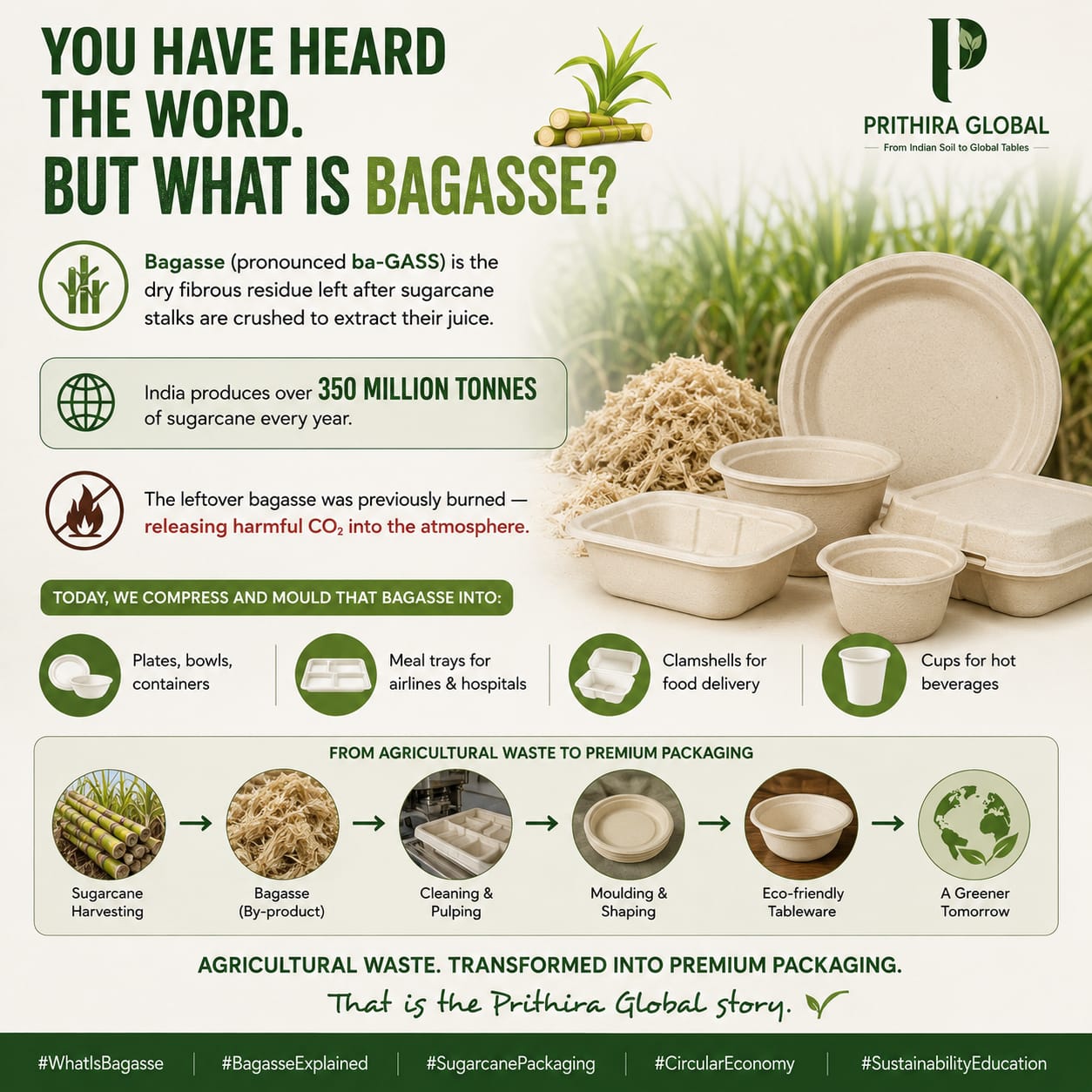
Bagasse is the dry fibrous material left behind after sugarcane stalks are crushed to extract their juice. For decades, it was considered agricultural waste — burned in fields or discarded at sugar mills. Today, it is one of the most promising raw materials for sustainable food packaging in the world.
By converting bagasse into tableware — plates, bowls, cups, clamshell boxes — we give this "waste" a second life as a genuinely useful, genuinely eco-friendly product.
5 Reasons Bagasse Tableware Beats Plastic
1. It Actually Breaks Down
Conventional plastic tableware takes 400 to 1,000 years to decompose. Even "degradable" plastic often just breaks into smaller microplastic particles that enter the soil and water supply.
Bagasse tableware is fully compostable. Under composting conditions, it breaks down completely within 90 days — returning to the earth as organic matter, not microplastics.
2. It Handles Heat — Plastic Doesn't
Here's something most people don't know: when plastic containers are exposed to heat, they can leach harmful chemicals like BPA and phthalates into food. Hot dal, freshly fried snacks, steaming rice — these are the exact conditions under which conventional plastic is most dangerous.
Bagasse tableware is naturally heat-resistant up to 120°C. It won't warp, melt, or leach anything into your food. It's also microwave-safe — something most plastic food containers are not.
3. It's Made From Waste, Not From Oil
Plastic is a petroleum product. Manufacturing it consumes fossil fuels, emits greenhouse gases, and creates toxic by-products.
Bagasse is agricultural waste that would otherwise be burned. Converting it into tableware reduces the carbon footprint of the sugarcane industry while replacing a product that requires fossil fuels to make. It's a circular solution — waste in, useful product out, compost at the end.
4. It Holds Up During Use
A common misconception is that eco-friendly products are fragile or flimsy. Bagasse tableware is rigid, sturdy, and leak-resistant. It handles wet foods, gravies, and oily snacks without softening or collapsing — unlike cheaper paper alternatives. For food service businesses, that reliability matters.
5. It Meets International Food Safety Standards
Quality bagasse tableware is certified for food contact safety — meeting standards like FDA (USA), EU food contact regulations, and BPI compostability certification. For businesses serving food, this is non-negotiable. You need packaging that is safe, not just sustainable.
The Cost Question
Let's be honest: bagasse tableware currently costs more per piece than the cheapest plastic options. That gap is narrowing as production scales up globally — but it exists.
What's worth considering is the full cost. Plastic waste disposal, regulatory fines under India's plastic ban regulations, reputational risk with environmentally conscious consumers, and the long-term cost of plastic pollution are not free. They're just paid by someone else — or by the next generation.
For businesses in the HoReCa sector, corporate catering, and event management, the price premium is also increasingly something customers are willing to pay for — or even expect.
India Is Moving in This Direction
The Government of India banned identified single-use plastic items from July 2022. The regulatory direction is clear. Businesses that make the switch now avoid future compliance scrambling and build a genuine competitive advantage with buyers who care about sustainability — which is a growing segment, both domestically and in export markets.
The Bottom Line
Bagasse tableware is stronger than you'd expect, safer for hot food, fully compostable, made from agricultural waste, and increasingly cost-competitive. Plastic tableware is none of those things.
The switch isn't just the environmentally responsible choice. For forward-thinking food businesses, it's becoming the commercially smart one too.
Prithira Global supplies premium bagasse tableware across Northeast India, Siliguri, and for export markets. Available in bulk. Get in touch to request a catalogue or samples.