India's Plastic Ban — What It Means for Your Business in 2026

If your business still uses plastic carry bags, plastic cutlery, single-use plastic cups or polystyrene containers, you are already operating in legally risky territory. And in 2026, that territory is shrinking fast.
India's plastic ban is no longer a future policy. It is active law — and enforcement is tightening in ways that many businesses have not yet fully registered.
Here is what you actually need to know.
What Was Banned and When
In August 2021, the Ministry of Environment, Forest and Climate Change prohibited 19 specific single-use plastic items identified as having low utility but high littering potential. The ban came into force on 1 July 2022.
The banned items include plastic cutlery — forks, spoons, knives — plastic straws, plastic stirrers, plastic plates, plastic cups, plastic glasses, plastic trays, polystyrene (thermocol) for decoration, and plastic wrapping used around sweets boxes.
Plastic carry bags thinner than 120 microns have been prohibited since 31 December 2022. This is critical for retail and grocery businesses — most of the thin polybags commonly used in Indian shops fall well below the 120-micron threshold and are now technically banned.
How Enforcement Has Evolved
The honest picture in 2022 was that enforcement was uneven. Many businesses continued using banned items without facing immediate consequences. That period of grace is ending.
Enforcement remains uneven, with weak ground-level monitoring and data gaps the biggest hurdles — but the direction of travel is clear and one-way.
The 2025 rules insert a new Rule 11A, which mandates marked barcode or QR code or unique identification on plastic packaging from 1 July 2025. This traceability requirement makes it significantly harder for non-compliant packaging to move through supply chains undetected.
State pollution control boards are conducting more frequent inspections. Penalties are being issued. And businesses that have not made the switch yet are increasingly finding themselves caught off guard.
The practical implication: the window for quietly continuing with banned plastic while hoping enforcement doesn't reach you is closing. Businesses that act now are making a planned transition. Businesses that wait are making an emergency scramble.
What the Ban Means Specifically for Different Businesses
Restaurants, Cafés and Cloud Kitchens
Plastic cutlery, plastic straws and plastic cups are banned. If you are serving customers with plastic forks and spoons or sending delivery orders with plastic cutlery packs, you are non-compliant. The switch to bio cutlery — cornstarch or wooden alternatives — is straightforward and the cost difference is smaller than most operators assume.
Hotels and Catering Companies
Polystyrene containers for food packaging are banned. Plastic trays and plastic plates used for single-use service are banned. The hospitality sector, operating at high volumes and under greater regulatory scrutiny than street-level businesses, faces a heightened compliance risk.
Retail and Grocery Businesses
Plastic carry bags below 75 microns have been banned. From December 2022, the threshold moved to 120 microns. If your shop is still handing out thin plastic carry bags to customers, you are operating illegally. Cornstarch biodegradable carry bags are the most direct compliant replacement — they look and function like plastic bags but are 100% compostable.
Food Delivery Platforms and Packaging Businesses
Extended Producer Responsibility (EPR) rules now apply to plastic packaging. Packaging producers and brand owners are required to collect and recycle the exact amount of plastic they introduce into the market, with penalties for missing compliance.
The Items That Are Not Banned — Yet
It is worth being clear about what the current ban does and does not cover. The single-use plastic ban in India addresses roughly 11% of the entire gamut of single-use plastic waste. Multi-layer plastic packaging, PET bottles, and many forms of flexible plastic packaging are not currently banned under the same rules — though EPR obligations apply.
This does not mean businesses in these categories have nothing to worry about. The regulatory direction is clearly towards greater restriction, not less. Businesses that build sustainable alternatives into their supply chain now are making investments that will pay off as the ban expands.
The Alternatives Are Ready
One of the most common objections to switching from plastic has been availability — that compliant alternatives are hard to find, inconsistent in quality, or prohibitively expensive. In 2026, that objection no longer holds.
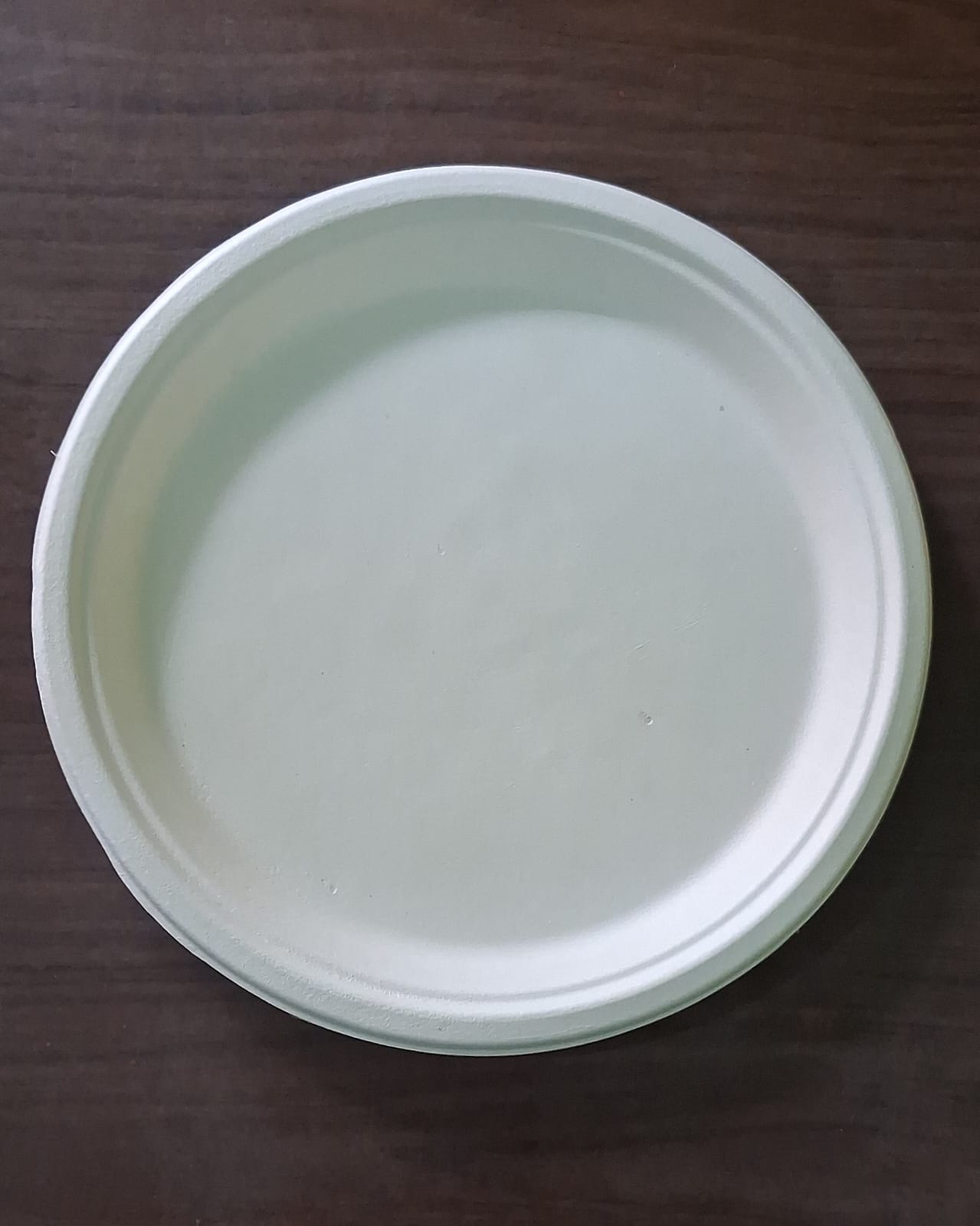
Bagasse tableware — plates, bowls, clamshell boxes and meal trays made from sugarcane fibre — is widely available, food-safe, heat-resistant and 100% compostable. It is a direct functional replacement for plastic and polystyrene food service items.
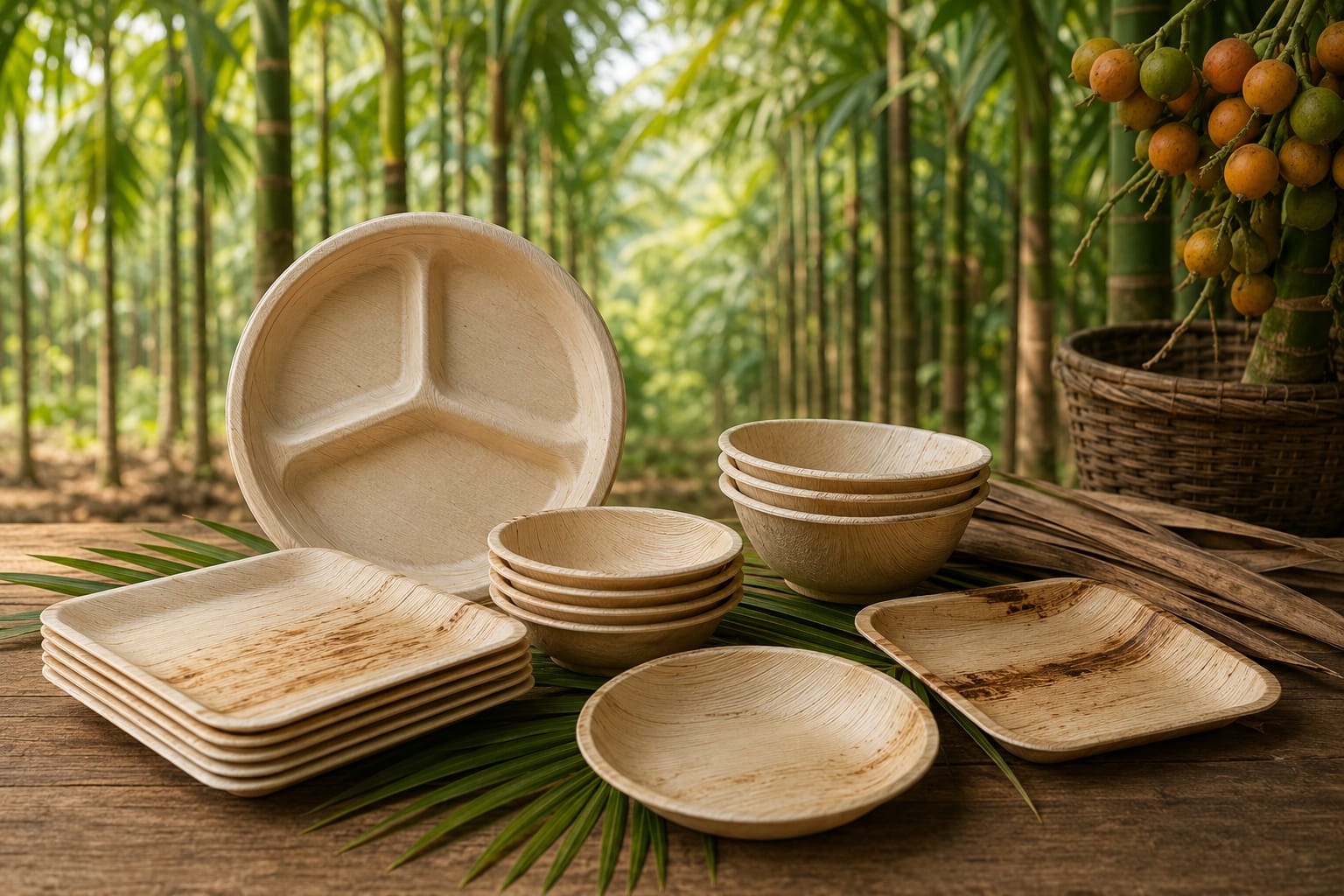
Areca leaf tableware — made from naturally fallen palm leaves — provides a premium, chemical-free alternative for fine dining and specialty hospitality contexts.
Cornstarch carry bags — available in multiple sizes, food-grade safe, and compostable — directly replace the thin plastic carry bags that are now banned.
Bio cutlery — cornstarch and wooden forks, spoons and knives — replaces banned plastic cutlery at a cost point that has become increasingly competitive.
The supply chain for these alternatives is established. Certified, food-safe products are available for bulk supply across India. The switch is not as complicated or as expensive as it was even two years ago.
What to Do Now
Step 1 — Audit your current packaging. Go through every plastic item your business uses. Identify which are covered by the current ban and which are not yet regulated but likely to come under future restrictions.
Step 2 — Prioritise the highest-risk items. Start with the items that are most clearly banned and most visible to enforcement — plastic cutlery, plastic carry bags under 120 microns, polystyrene containers.
Step 3 — Request samples from certified suppliers. Do not switch at scale without testing alternatives under real operating conditions. A reliable supplier will provide samples willingly.
Step 4 — Factor in EPR obligations. If your business produces or imports plastic packaging, make sure you are registered under EPR and meeting your collection and recycling obligations.
Step 5 — Communicate the switch. A business that has proactively switched to compostable packaging has a story worth telling — to customers, to corporate clients, and to the regulators who will eventually inspect you.
The Bigger Picture
India's plastic ban is part of a global shift that is accelerating, not slowing down. The UN Global Plastics Treaty, currently being negotiated, is expected to create international standards that will further restrict plastic packaging in trade. Export-oriented businesses will need to comply with importing country regulations — which in the EU and UK are already stricter than India's current rules.
Businesses that treat the plastic ban as a compliance burden to minimise are missing the more important point. Businesses that treat it as a prompt to genuinely rethink their packaging supply chain are building something more durable — a brand, a supply chain, and a set of relationships that will still be competitive in ten years.
The ban is not going away. The question is whether your business gets ahead of it or gets caught behind it.
Switch to Compliant, Certified Alternatives
Bagasse tableware, areca leaf plates, cornstarch carry bags, bio cutlery and coir scrubbers — all in one downloadable PDF with dimensions, MOQs and certifications.
Download Our Product CataloguePrithira Global supplies certified biodegradable alternatives to banned plastic items — bagasse tableware, areca leaf plates, cornstarch carry bags, bio cutlery and coir scrubbers. Available in bulk for HoReCa, retail, catering and institutional buyers across India. Get in touch to request samples or a quotation.